
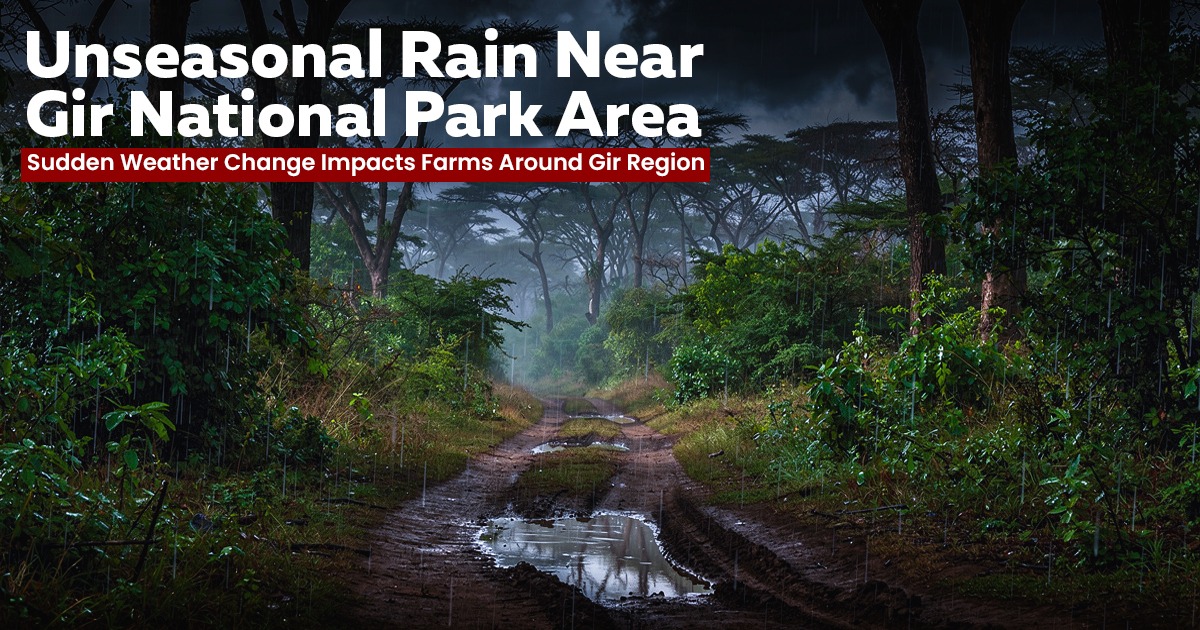
Unseasonal Rain Near Gir National Park Area
Gir National Park
Gir tour packages
Unseasonal rain near Gir
- Date : March 10, 2026
On 23rd February, unexpected rainfall was observed in the Amreli district of Gujarat. This rainfall occurred when it was not expected. In this state, monsoons begin in June and continue for a few months. By the end of February, the climate is dry and clear, and there is no rainfall. Hence, this rainfall was unexpected in this region.
Earlier, the weather department had forecasted the possibility of rainfall in some areas of the district, and this forecast came true. Light to moderate rainfall was observed in many towns and villages. This happened during the Rabi season. By February and March, crops are almost ready to be harvested. The farmers require a clear climate at this time, and hence, they are worried.
Areas Affected Near Gir National Park
Rainfall was recorded in the towns of Khambha, Dhari, and Bagasara. Apart from the towns mentioned, some villages close to Gir National Park also experienced rainfall. The intensity of the rainfall was not equal in all areas. While some areas experienced light rainfall, other areas experienced noticeable rainfall.
The villages that experienced rainfall include Dalkhaniya, Gigasan, Gadhiya, Ingorala, Nani Dhari, Nana Visavadar, Sudavad, Lundhiya, and Sapar. These villages are close to Gir National Park. This area is significant for agricultural and wildlife operations. Many households in these villages rely on agriculture for their livelihood.
After the start of rainfall, there was a sudden change in the weather. The sky turned cloudy, and the humidity level rose. There was a slight drop in temperature in some areas. It took place very quickly. Sudden changes in weather can impact agricultural activities. Farmers may have to postpone their harvesting or agricultural activities.
The daily activities of people living in the surrounding areas were also impacted since they did not anticipate any rainfall at this time. The surrounding area of Gir National Park has diverse land use. Some areas are used for agricultural purposes, while other areas are used for forest development. Due to this reason, sudden changes in weather impact agricultural as well as forest activities.
Impact on Farmers & Crops
Farmers in Amreli district are worried because the rainfall came when winter crops were at a very important stage. Most Rabi crops are still standing in open fields and are almost ready for harvest. During this final stage, dry weather is needed to keep grain quality good and to protect total production.
Major crops in this region are chickpea (chana), wheat, cumin (jeera), pigeon pea (tuver), & coriander (dhana). These crops do not tolerate extra moisture near harvest time. If rainwater stays on plants or remains in the soil for a long time, it can cause damage. High moisture can increase fungal disease in crops. Grains can lose their original color and shine. Overall quality can become lower, and sometimes grain weight reduces, which can also lower the selling price.
There is also a possibility of waterlogging in the fields. Even short rainfall can disturb the soil moisture balance. Very wet soil can weaken roots & reduce plant growth & yield per acre. Many farmers depend on Rabi crops for their yearly income. Money was already spent on farming needs. Crop loss can create financial problems.
Situation in Bagasara & Nearby Villages
Rainfall was also recorded in Bagasara city & nearby rural areas. Villages such as Sudavad, Lundhiya, & Sapar received noticeable showers. The rainfall in these places added to the concerns of local farmers.
In many fields around Bagasara, crops were almost ready for harvest. The sudden rain created uncertainty about the final crop quality. Farmers are regularly inspecting their fields to check for any visible damage. They are looking for signs of fungal infection, crop bending, or grain discoloration caused by moisture.
Agricultural workers & farmers are closely watching the weather in the coming days. If dry weather comes back quickly, then the damage might be limited. However, if additional rainfall occurs, risks may increase. Continuous moisture can worsen crop conditions & reduce output further.
The local community has raised concerns about potential economic losses. The rural economy in these areas mainly depends on agriculture. If crop production decreases, household income directly decreases. Lower farm income can also affect local markets, traders, & transport services. Small businesses in villages may see reduced activity if farmers earn less. For many families, the outcome of this Rabi season is important for financial stability throughout the year.
Importance Of Gir National Park Region
Gir National Park is an important wildlife destination for Gujarat. It is commonly recognized as the natural habitat of the Asiatic lion. Every year, many visitors travel to Gir National Park for wildlife safari and nature trips. Tourism here supports hotels, local guides, transport services, drivers, and shops.
The villages that received rainfall are in areas around Gir National Park. Due to their closeness, weather conditions impact agriculture as well as tourism. When unexpected rainfall occurs, it has the ability to affect the day-to-day functioning of the area.
Rainfall may pose some challenges. Rural roads may become muddy & slippery. This can disturb transport and supply service flow. The movement of goods from villages to nearby towns may experience delays. The schedules for the safaris conducted in Gir National Park may also require rescheduling based on the conditions on the ground.
If the rainfall is minimal & for a short time, the program will continue as usual. However, if the rainfall is heavy, there may be a need to reschedule. Thus, the effect of unseasonal rainfall is not only felt in agriculture. It may also affect tourism activities around Gir National Park.
What This Means For Visitors & Gir Tour Packages
Unpredictable weather patterns around Gir National Park may affect travel schedules. Sudden rain showers may cause changes in the timing of the safari. Rain-soaked conditions may affect the movement of vehicles on some routes in the forest. The internal roads & village roads may become slippery for a short while.
Persons wishing to book the Gir tour packages should consult the official weather reports before going on their journey. Being aware of the current weather conditions will enable visitors to plan accordingly. In case the need arises, the travel schedules or the times of the safaris may be rescheduled depending on the weather conditions.
Rainfall may also affect the movement of wildlife. Light rainfall may enable the animals to move as usual in the forest. Heavy or continuous rainfall may cause a temporary stop in the conduct of safaris for the safety of the visitors. Visitors should be flexible in their schedules when booking Gir tour packages during weather changes
Related Post:
Recent Posts
-

Rakul Preet Singh Gir Safari Video Explained
May 14, 2026 -
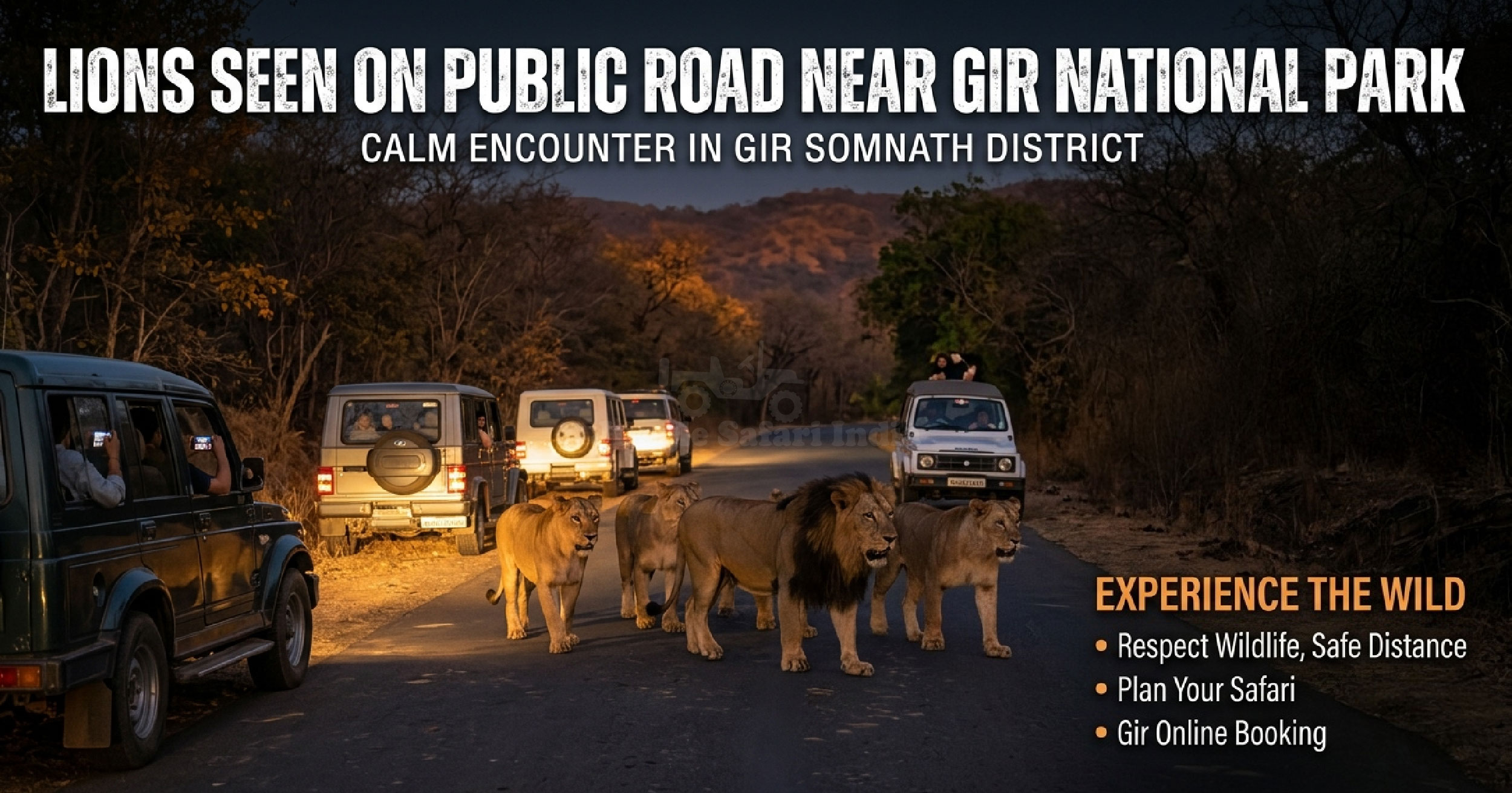
Lions Seen On Road Near Gir National Park
April 23, 2026 -

Father Lion Teaches Cubs In Gir National Park
April 16, 2026 -

New Resort Near Gir National Park By Ramee Group
April 09, 2026
(0) Comments: